Start a home-based electronics repair bench
Fix phones, tablets, laptops and small gadgets from a home workbench, with customers posting or dropping off devices.

- £300-1.5k
- Side hustle
- From home
Estimates for a small start in the UK, not guarantees.
Official data
1,549 UK companies in this field, 32% registered in the last 2 years
SIC 95210 “Repair of consumer electronics”. Source: Companies House, November 2026.
What it is
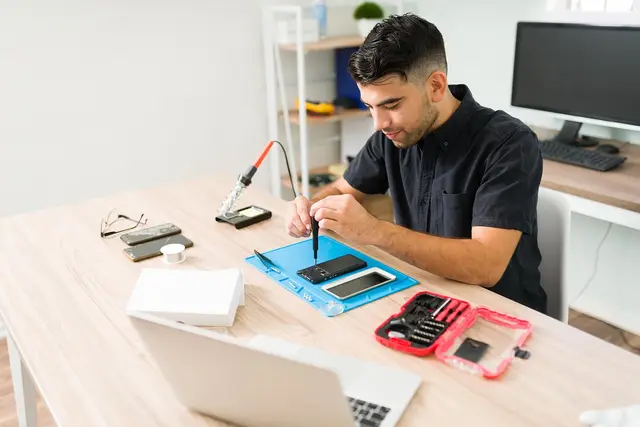
A small repair bench at home where you fix common faults such as cracked screens, tired batteries, charging ports and games consoles. Customers drop off by arrangement or send items by post.
Your first three steps
- Choose a narrow starting range, such as phone screens and batteries, and practise on spare or second-hand devices
- Buy a basic toolkit and an anti-static mat, and set up a parts supplier account
- List a price menu on local community pages and ask friends and neighbours for a first few repairs and reviews
Who pays
Households with a broken phone, tablet, laptop or console who want a cheaper option than replacing it, plus local people through word of mouth and online listings.
How it makes money
A fixed price per repair, made up of your labour plus the cost of parts. You can add a small fee for diagnosis if the device turns out to be unfixable.
Skills that help
- Fine, careful handiwork
- Fault finding and patience
- Clear, honest customer communication
Watch out for
- Check whether your landlord, mortgage lender or council needs to agree to running a business from home
- Public liability insurance, and cover for customers' devices while in your care (check what policies include)
- Data privacy: customers' devices hold personal information, so decide how you handle it and consider data protection registration requirements with the ICO
- Lithium batteries need careful handling and storage, and old parts and batteries need proper disposal (check waste rules for businesses)
- Repairing some branded or mains-powered items may need extra skills or testing, so avoid work you are not trained for
Deep research report · UK
Everything you need to start: home-based electronics repair bench
Researched with live web search for United Kingdom: real startup prices, the licences and rules, what others charge, a break-even example, how to find your first customers and a 30-day launch plan. With sources.
- Startup costs with real prices
- Licences, registration and rules
- Pricing: what others charge
- Break-even example
- Finding your first customers
- 30-day launch plan
- Risks and how to reduce them
Questions people ask
How much does it cost to start an electronics repair business at home?
Estimates suggest startup costs typically around £300 to £1,500, depending on the tools, parts and insurance you need. Starting with the common repairs, such as screens and batteries, can keep early costs down.
How much can a home electronics repairer earn?
Monthly revenue is typically estimated at around £300 to £1,500, depending on how many repairs you take on and the devices you can fix. Word of mouth and online listings can help bring in customers.
What should I check before repairing devices from home?
Check whether your landlord, mortgage lender or council needs to agree to a home business. Also check insurance for you and customers' devices, data protection and ICO registration, safe handling and disposal of lithium batteries, and avoid work you are not trained for.
Other ways to run this business
Similar tech services ideas

Home typewriter repair workshop
Clean, fix and service manual and electric typewriters for writers and collectors from a bench at home.
- £300-1.5k
- Side hustle
- From home
Computer repair at people's homes
Visit homes and small offices to fix slow, broken or virus-hit laptops and PCs.
- £300-1.5k
- Side hustle
- Out and about

Home and small office computer security
Remove malware and set up protection for households and tiny offices, at their place or by remote session.
- £200-1.5k
- Side hustle
- Out and about

Online card machine reseller for small sellers
Help market traders and mobile businesses choose, order and set up card readers remotely.
- £300-1.5k
- Side hustle
- Online

Freelance remote IT consultant
Advise businesses on systems, software and technical problems from home, billed by the day or project.
- £200-1.5k
- Side hustle
- From home
Freelance online shop builder
Set up and look after online shops for small retailers, working solo from home.
- £200-1.5k
- Side hustle
- From home
Photo: This_is_Engineering on Pixabay