Weekly neighborhood farmers' market
Run a seasonal weekly market where local growers and makers rent stalls and shoppers buy direct.
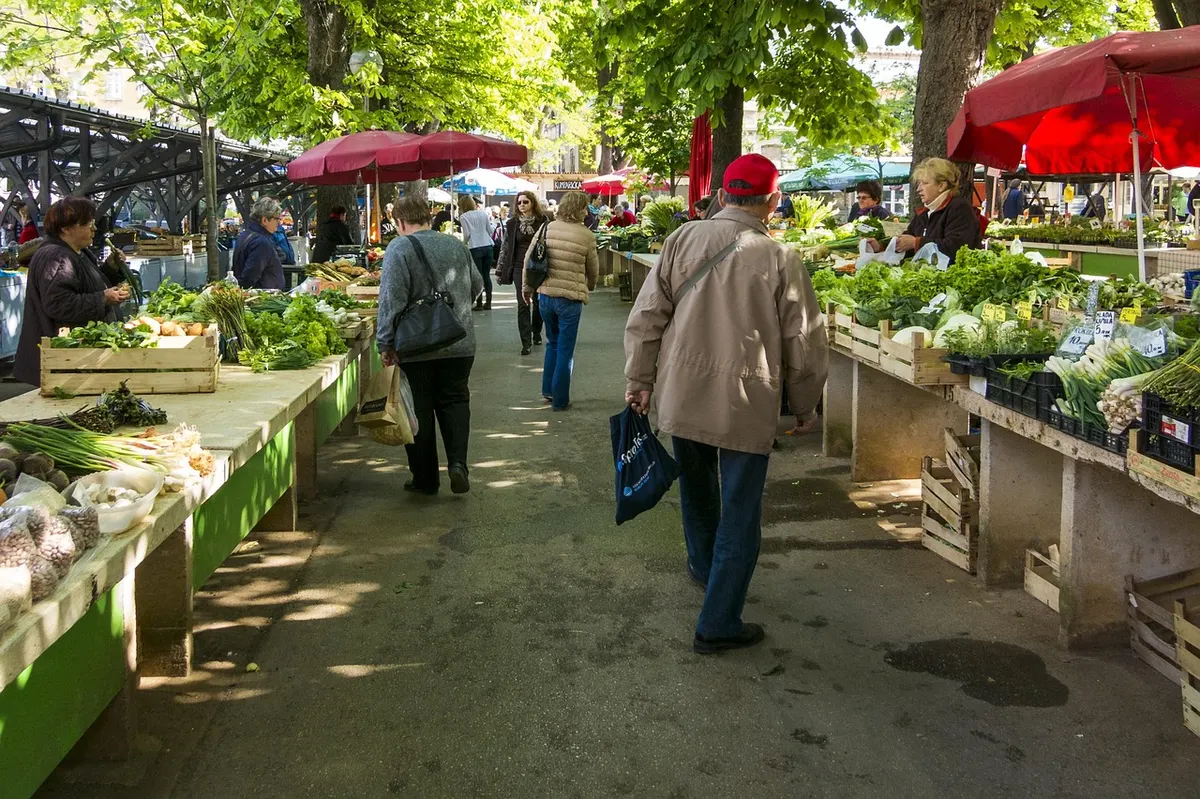
- $3k-12k
- Part-time
- Out and about
- Licence or permit needed
Estimates for a small start in the US, not guarantees.
Official data
6,270 US businesses with employees in this field, +2.0% in a year
NAICS 561920 “Convention and trade show organizers”. Source: U.S. Census Bureau, County Business Patterns 2023.
What it is
You organize a regular outdoor market in a lot, park or street, usually weekly through the growing season. You recruit vendors, set the rules, lay out the stalls and promote the market to shoppers.
Your first three steps
- Scout two or three possible sites and ask the owners (city, church, shopping center) what they would need to host a weekly market
- Talk to local farmers and food makers to see how many would commit, and check what fee they would pay for a stall
- Call your city or county to ask about market permits, then get quotes for general liability insurance
Who pays
Farmers, bakers, food makers and craft vendors who pay for a stall. Some markets also get small local sponsors.
How it makes money
Stall fees per vendor per market day, either flat or tiered by stall size. Sponsorships and a small fee for extras like electricity can add to this.
Skills that help
- Organizing people and logistics
- Persuading vendors and landowners
- Local marketing and social media
- Staying calm on busy market days
Watch out for
- General liability insurance, which most sites and many vendors will require
- Check with your city or county about special event or market permits, and whether street closures need approval
- Check with your local health department about food vendor permits and who is responsible for them (often each vendor)
- If you want to accept SNAP/EBT, check the USDA application process and equipment needs
- Bad weather and slow weeks can cut vendor turnout, so build in a cushion
- Check your state's rules on what counts as a farmers' market and any producer-only requirements
Deep research report · US
Everything you need to start: weekly neighborhood farmers' market
Researched with live web search for United States: real startup prices, the licences and rules, what others charge, a break-even example, how to find your first customers and a 30-day launch plan. With sources.
- Startup costs with real prices
- Licences, registration and rules
- Pricing: what others charge
- Break-even example
- Finding your first customers
- 30-day launch plan
- Risks and how to reduce them
Questions people ask
How much does it cost to start a farmers' market?
Estimates put startup costs at typically around $3,000 to $12,000, depending on your site, the insurance you need and how much you spend on setup and promotion. Liability insurance is usually required by sites and vendors.
How much can a farmers' market organizer make?
Estimates suggest monthly revenue of typically around $1,500 to $7,000, depending on stall fees, vendor numbers and any sponsors. Bad weather and slow weeks can cut vendor turnout, so build in a cushion.
What permits and rules should I check to run a farmers' market?
Check with your city or county about special event or market permits and any street closure approvals. Ask your local health department about food vendor permits. Also check general liability insurance, SNAP/EBT requirements and your state's definition of a farmers' market.
Other ways to run this business

Similar events ideas

Live streaming for events and hybrid meetings
Livestream conferences, talks and ceremonies with cameras, a switcher and a reliable internet setup.
- $2.5k-12k
- Side hustle
- Out and about

Monthly pop-up night market
Run an evening market in a lot or plaza, with local food, craft and goods vendors paying for a spot.
- $3k-12k
- Part-time
- Out and about

Pop-up play sessions in rented halls
Rent a community hall by the hour and run play sessions and parties with portable equipment.
- $3k-12k
- Side hustle
- Out and about

Event portable toilet and handwash rental
Own a small stock of toilets and handwash stations for local events, with a licensed hauler doing the pumping.
- $3k-12k
- Side hustle
- Out and about

Event security guard company
Supply licensed guards for local parties, festivals and venues, hired by the event rather than on long contracts.
- $3k-12k
- Side hustle
- Out and about

One-day food and makers festival
Run a free-entry local festival in a park or lot, paid for by vendor fees and sponsors.
- $3k-12k
- Side hustle
- Out and about
Photo: pixifant on Pixabay